College of Osteopathic Medicine
Michigan State University







After completing these materials you will:
- Be alerted to conditions in the thoracic spine that may result in a loss of pulmonary function.
- Understand the clinical implications for the patient when pulmonary function is compromised.
- Understand how osteopathic manipulative treatment can help to restore normal pulmonary function.
- Know how to diagnose and treat restriction of the thoracic inlet.
- Know how to diagnose and treat structural and tissue texture abnormalities in the thoracic spine that may result from viscero-somatic reflex activity.
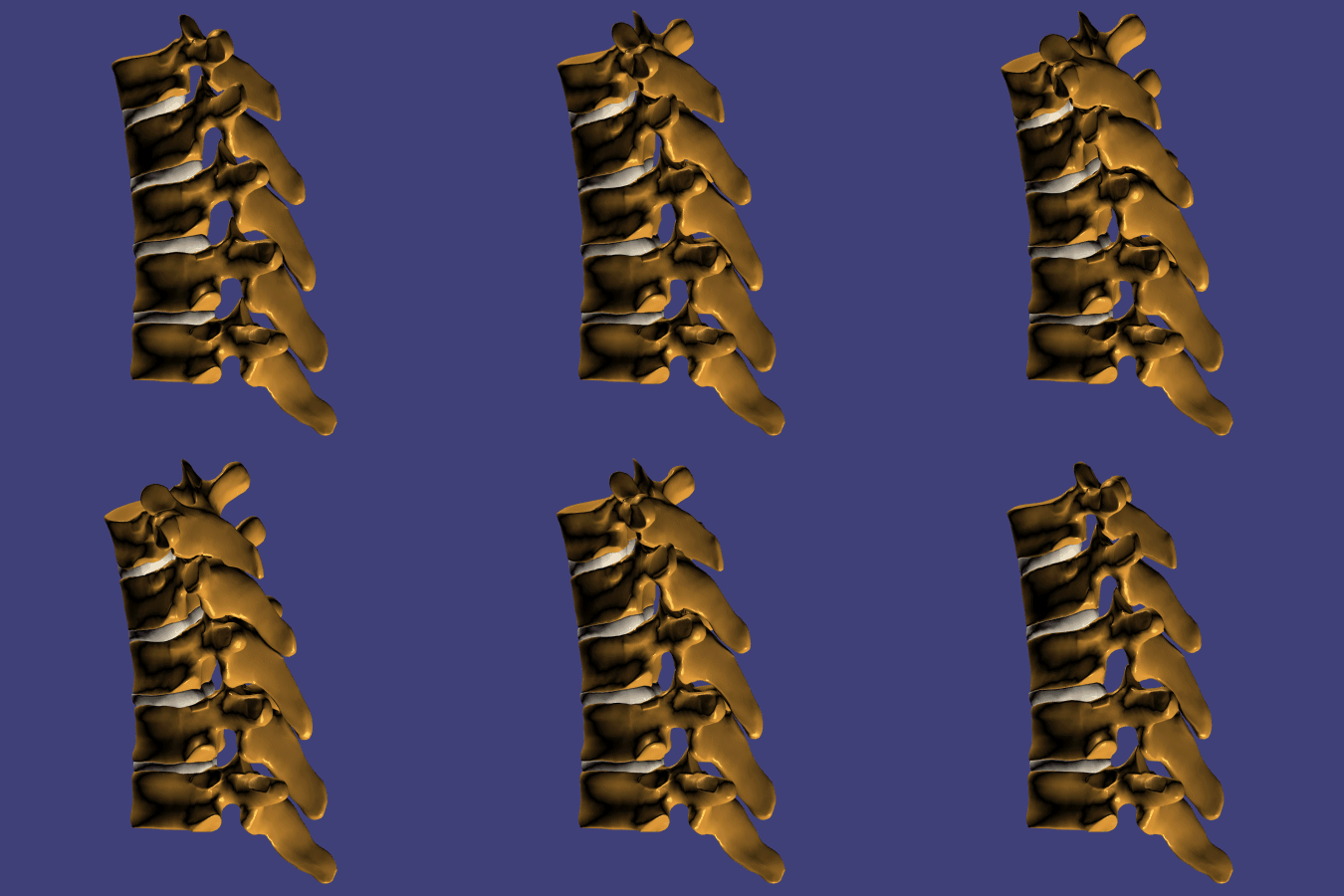
- Be able to describe characteristic motion mechanics at various levels of the thoracic spine.
- Understand how unique morphology of the facets contributes to characteristic motion mechanics at various levels of the thoracic spine.
- Understand how soft tissues contribute to characteristic motion mechanics at various levels of the thoracic spine.
- Know how to perform a basic thoracic screening examination.
- Know how to perform a detailed thoracic scan.
- Know how to diagnose and treat dysfunction in the thoracic spine.